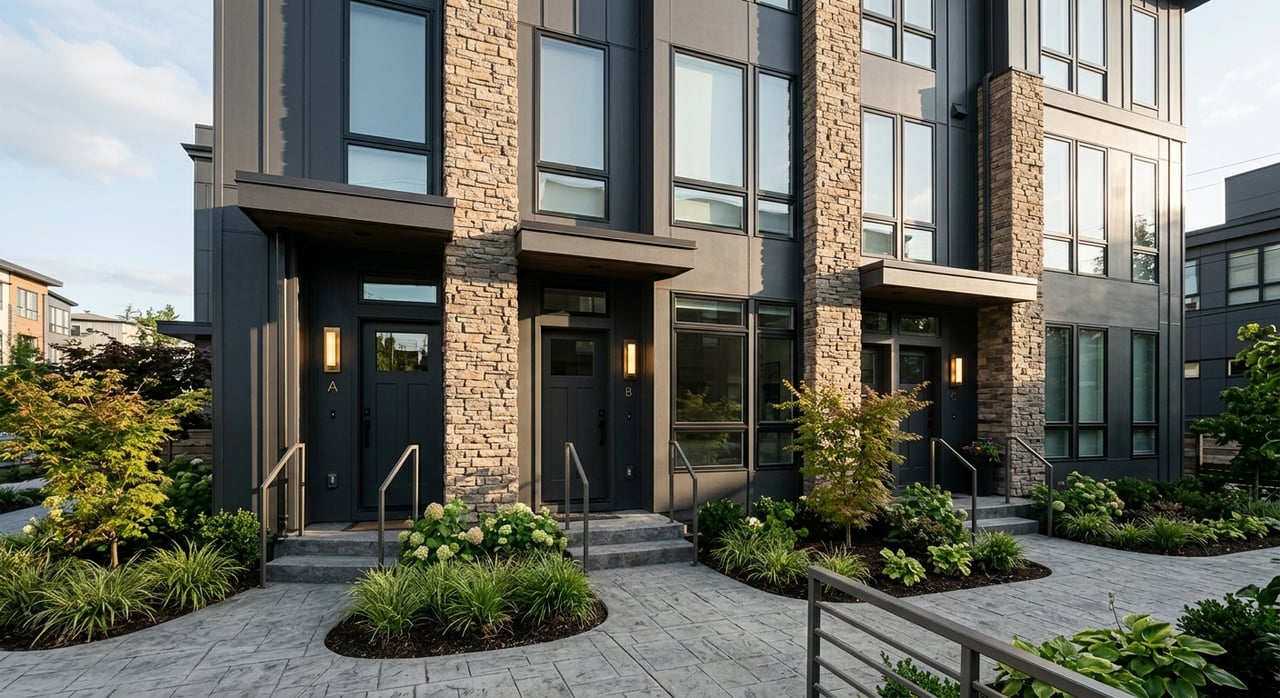
If you are thinking about buying a condo or townhome in Red Bank, the biggest surprise may be this: two homes that look similar on the outside can come with very different monthly costs, rules, and long-term responsibilities. That matters in a compact, high-demand market where inventory is limited and convenience is a big part of the appeal. When you understand how ownership structure, HOA costs, parking, flood risk, and local rules work, you can buy with more confidence. Let’s dive in.
Why Red Bank attracts attached-home buyers
Red Bank offers a lifestyle that draws many buyers to condos and townhomes in the first place. The borough is only 1.75 square miles with about 12,830 residents, and Census data shows just how compact the community is.
That smaller footprint helps support a walkable pattern of living. State and county planning materials describe Red Bank as a relatively compact borough near build-out, with the train station within walking distance of downtown commercial areas and a strong mix of arts, dining, shopping, parks, and community activity.
The local lifestyle also extends to the waterfront. The borough notes that Marine Park on the Navesink River has long served as a community gathering place, and the seasonal event calendar includes live music, outdoor movies, and family-friendly programming across the park system.
For many buyers, that adds up to a simpler day-to-day routine. You may be looking for less exterior upkeep, easier access to downtown, or a home that fits a first purchase, downsizing move, or part-time commute into New York.
Red Bank inventory is limited
One reason condos and townhomes get so much attention in Red Bank is simple: there are not many available at one time. Redfin’s condo market page for Red Bank recently showed only 6 condos for sale with a median listing price of $359K.
At the same time, Redfin’s broader market data points to a February 2026 median sale price of $565K and a median of 31 days on market. That gap helps explain why attached homes can look like a more approachable entry point, even when the overall market remains competitive.
The key is not to focus only on the list price. In Red Bank, true affordability often depends on the full monthly picture, not just the mortgage payment.
HOA fees can change affordability
A lower purchase price does not always mean a lower monthly cost. Recent Red Bank attached-home listings show association dues ranging from about $150 per month for a fee-simple townhouse-style property to $308, $406, and $501 per month for other attached units, according to recent Red Bank listing examples.
Those dues may cover very different things. Depending on the property, HOA costs can include water, sewer, heat, trash, snow removal, lawn care, common-area upkeep, exterior maintenance, and management fees.
That means you should compare homes based on total monthly carrying cost, including:
- Mortgage payment
- Property taxes
- HOA dues
- Insurance
- Possible flood insurance
- Parking-related costs, if any
A condo with higher dues may still offer value if those fees cover major services you would otherwise pay on your own. On the other hand, a lower-fee property may leave you responsible for more maintenance or future repair costs.
Ownership type matters more than appearance
One of the most important things to confirm is the ownership structure. A listing may say condo, townhome, or townhouse-style home, but the label alone does not tell you exactly what you own or what the association controls.
According to New Jersey housing-inspection guidance, a fee-simple home means the unit is individually owned rather than held in condo or co-op form. But a townhouse development can still have an association and shared maintenance responsibilities, even if the home looks more like a traditional row-style residence.
That is why you should ask specific questions before making an offer. In Red Bank examples, both fee-simple townhouse-style homes and fee-simple condominium units appear on the market, so the exterior design does not automatically reveal the legal structure.
What to review in HOA documents
New Jersey requires common-interest communities to follow specific standards. Under the state’s Planned Real Estate Development Full Disclosure Act and related regulations, developers must register an offering plan before sale, and associations must adopt an operating budget, keep reserve funds separate, and obtain a reserve study with a 30-year funding plan.
That reserve requirement is especially important for buyers. It can help you understand whether the association is planning ahead for roofs, paving, siding, structural systems, and other major capital items.
New Jersey also signed 2024 legislation focused on strengthening structural integrity and long-term maintenance for residential condominiums and co-ops. For you as a buyer, that makes building-condition review and reserve funding even more important during due diligence.
When reviewing association documents, look closely at:
- Current monthly dues
- What the HOA covers
- Reserve study and funding plan
- Recent or pending special assessments
- Budget health
- Rules on rentals or leasing
- Pet, renovation, and use restrictions
- Owner and guest parking rules
Understand maintenance boundaries
One attached home may give you more control over repairs and exterior improvements than another. Another may shift more responsibility to the association. That division can affect both your costs and your flexibility.
New Jersey guidance also notes that condominium associations may access units during reasonable hours for maintenance or emergency repairs affecting common elements. That is another reminder that condo ownership can involve shared responsibilities and limits that differ from a detached home.
If you are deciding between a condo and a fee-simple townhome, ask where the maintenance line is drawn. You want to know who handles the roof, siding, windows, decks, mechanical systems, and any limited common elements before you commit.
Historic review may affect updates
In some parts of Red Bank, exterior changes may require an extra layer of review. The borough maintains Historic Sites Design Guidelines, and exterior work in historic districts can require Historic Preservation Commission review and a Certificate of Appropriateness.
For older condo or townhome buildings, that can affect projects such as windows, siding, roofs, additions, decks, and other visible alterations. If you plan to renovate, replace exterior materials, or personalize outdoor features, this is worth checking early.
This does not mean a property is a bad fit. It simply means your timeline, approval process, and design options may look different than they would elsewhere.
Parking should be part of your search
In Red Bank, parking is not a small detail. The borough’s parking system includes meters, kiosks, permit spaces, and time limits designed to support turnover downtown.
That makes assigned parking, garage space, and guest parking more valuable for condo and townhome buyers. A well-located home near downtown may offer great walkability, but you still want clarity on where you and your visitors will park.
Parking questions to ask include:
- Is parking assigned, deeded, or first come, first served?
- How many spaces come with the unit?
- Is guest parking available?
- Are there permit requirements or extra fees?
- Are there restrictions on oversized vehicles or commercial vehicles?
Transit access can add convenience
For buyers who commute or want easier regional access, transit can be a major plus. NJ Transit’s Red Bank Station is on the North Jersey Coast Line and offers parking and bike racks, with service that connects to Penn Station New York.
That can make location near the station especially attractive, whether you are buying for your own use or considering long-term rental appeal where permitted. In this segment, convenience often supports value just as much as square footage does.
Flood risk is address-specific
Red Bank’s flood profile is not one-size-fits-all. State planning materials note flood hazard areas along the river and tributary waterways, and they recommend planning for both the 100-year and 500-year floodplain as well as climate-adjusted flood elevations.
That means you should evaluate flood exposure by property, not by borough-wide assumption. A riverfront or near-water attached home may carry a very different risk profile from another unit only a short distance away.
If a home is on your shortlist, review the specific address carefully. FEMA guidance and state planning materials support checking the official flood map for that exact property so you can understand whether flood insurance may be required and how that could affect your monthly cost.
Rental rules are not automatic
If you are buying with future flexibility in mind, do not assume rentals are allowed. That is especially important for investors and buyers who may want to rent the property later.
Red Bank’s short-term rental ordinance limits where short-term rentals are allowed. For condominiums and townhouses, it also requires both zoning eligibility and permission under the association’s governing documents, with principal-residence conditions applying.
Even long-term rental plans should be reviewed through the association documents. Before you buy, confirm any lease restrictions, minimum lease terms, occupancy rules, and approval requirements.
Questions to ask before offering
When you find a condo or townhome you like, these are smart questions to answer before you move forward:
- Is the unit fee simple, condo, or co-op?
- What exactly do the HOA dues cover?
- Are there recent reserve studies or capital plans?
- Have there been special assessments, or are any expected?
- Are exterior changes subject to historic review?
- How is owner and guest parking handled?
- Are rentals or short-term rentals allowed?
- Is flood insurance likely required for this address?
These answers can reveal the real difference between a home that looks affordable and one that truly fits your budget and goals.
What buyers should focus on most
In Red Bank, attached-home value is often driven by more than size or finish level. Location, parking, HOA coverage, reserve strength, flood exposure, historic-review obligations, and rental flexibility can all shape your experience as an owner.
That is why side-by-side comparisons matter. Two properties with similar square footage may come with very different monthly costs, rules, and long-term resale factors.
If you want a condo or townhome in Red Bank, the best strategy is to look beyond the photos and ask sharper questions early. When you evaluate the full picture, you can choose a home that supports both your lifestyle and your financial comfort.
If you want help comparing attached-home options in Red Bank, reviewing HOA details, or weighing the real monthly cost of ownership, connect with The Tully Group. You will get clear local guidance, practical advice, and a smooth process from search to closing.
FAQs
What should I know about condo fees in Red Bank?
- Condo and townhome association fees in Red Bank can vary widely, and they may cover items such as water, sewer, heat, trash, snow removal, lawn care, exterior maintenance, common-area upkeep, and management.
What is the difference between a Red Bank condo and a fee-simple townhome?
- A condo usually involves shared ownership elements and association control over certain common areas, while a fee-simple townhome means the unit is individually owned, though it still may be part of an association with shared responsibilities.
Are Red Bank condos and townhomes good for commuters?
- They can be, especially properties near Red Bank Station, which is on NJ Transit’s North Jersey Coast Line with service to Penn Station New York.
Do all Red Bank attached homes have the same flood risk?
- No. Flood risk in Red Bank is parcel-specific, so you should check the exact address rather than assuming the entire borough has the same exposure.
Can you rent out a condo or townhome in Red Bank?
- Rental rules depend on local regulations and the association’s governing documents, and short-term rentals are subject to Red Bank’s ordinance, zoning eligibility, and association permission.
Why is parking important when buying in Red Bank?
- Because downtown parking relies on meters, kiosks, permit spaces, and time limits, assigned owner parking and practical guest parking can significantly affect convenience and value.
